👇Watch Below👇
Ep: 232 - Push Button, Get Happy (Preview) - Psychology Podcast - Professor Michael Drane - Unpopular Culture Podcast - We are a forensic psychology podcast that focuses on true crime, pop culture and psychological phenomenon.
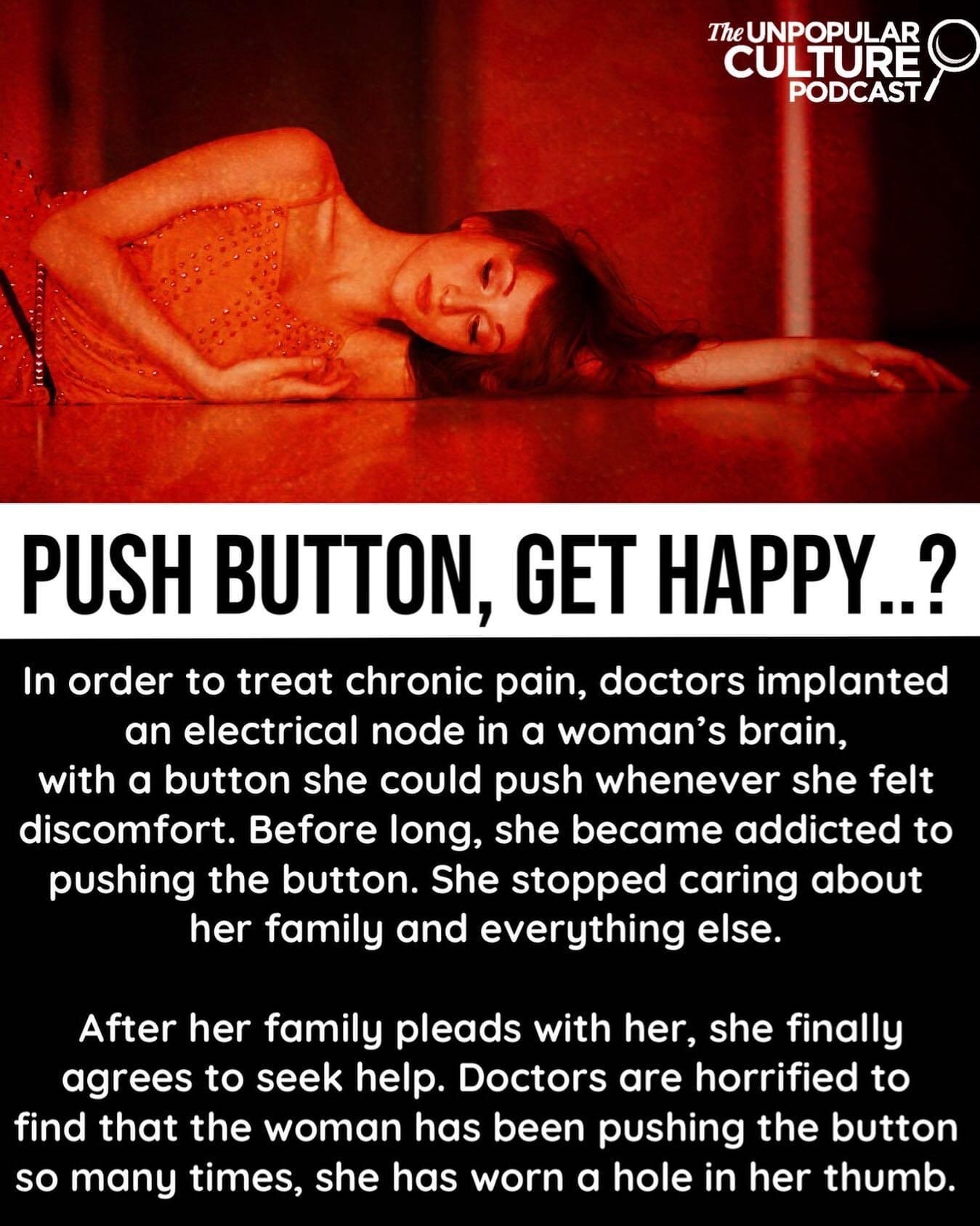
Every day we experience psychological addiction through our most popular video games because these platforms utilize neuropsychology to keep the players coming back for more. This is the same process as a slot machine. But what happens when you put a slot machine into a human brain? What happens when humans are given an all-access pass to bliss? In a split second, your pain, physical discomfort, and emotional misery are all gone. All you feel is bliss. And all you have to do to get it is to push this button. What are the repercussions of this outcome? What are the societal consequences?
In this week’s episode, Professor Michael Drane and Cybersecurity Engineer Ryan Lee explore what drives happiness, human ambition, and our sense of purpose. They look at the consequences of ‘pay for play’ happiness, the ethical ramifications of a digital divide, as well as the looming dangers and perks of technology like Elon Musk’s neuralink.
Stay safe out there friends, and we hope you enjoy the show.
Every day we experience psychological addiction through our most popular video games because these platforms utilize neuropsychology to keep the players coming back for more. This is the same process as a slot machine. But what happens when you put a slot machine into a human brain? What happens when humans are given an all-access pass to bliss? In a split second, your pain, physical discomfort, and emotional misery are all gone. All you feel is bliss. And all you have to do to get it is to push this button. What are the repercussions of this outcome? What are the societal consequences?
We discuss Neuralink. This is one of Elon Musk’s technologies that could reshape the future completely. What are the pros and cons of it? What is the worst-case scenarios. The possible medical uses for it. The possible military implications. How invasive is it? Can it be hacked?
We explore the psychology behind "Replika - My AI Friend" -- an app designed for virtual friendship, mentorship and romance. We discuss the nature of AI (Artificial Intelligence), whether it is possible to have a romantic relationship with your avatar, whether it has feelings, and even whether it has a soul.
We explore the psychology behind "Replika - My AI Friend" -- an app designed for virtual friendship, mentorship and romance. We is the nature of AI (Artificial Intelligence), is it possible to have a romantic relationship ? Does it have feelings, and a soul?
We discuss all things technological. These questions were submitted by patrons of the podcast. Can a driverless car be hacked ? What is the most terrifying future tech? How can a 3-D printer be used to make a bomb or a gun? Is the Dark Web really anonymous?
In this Tech themed “MythBusters” episode we bust commonly held Technology Myths: Do you have to get a new computer every 5 years? IS big brother listening or watching with devices like Alexa?" If you don’t open attachments you are safe from viruses? Are Driverless cars safe?
Featuring Professor/Psychoanalyst Michael Drane (@upcmd), and guest host Dr. Pat Owen talk about this episode and discuss the psychology of Black Mirror’s “Hated in the Nation”. They will focus on both the psychological, technological, and medical aspects of this show. We hope you enjoy the show.
Objectophillia is the condition of being attracted to cars, buildings, and other inanimate objects. If someone gave YOU an advanced robot, what kind of emotions should it have? Should you give it any emotions? Finally, what kind of relationship would you have with YOUR robot?
In this UNPLUGGED freestyle rant, Michael is joined by Cyber Security Engineer Ryan Lee to talk about the death of Net Neutrality and what YOU can do to help.
The Psychology of Black Mirror's "Nosedive". We discuss how social media influences the population with phony "perfect" versions of reality. We also discuss social mirroring, the future of advertising, social media incentives, and finally controlling the population with social media in china.
We deep dive into the psychology of technology addiction, and interview the author of the book "iMinds", Mari K Swingle (the co-founder of the Swingle Clinic in Vancouver) where they practice "clinical psychoneurophysiology" "Clinical psychoneurophysiology is a biological approach to healing and wellness. treats a multitude of common disorders such as ADHD, Depression, anxiety, and insomnia.
We discuss the literal dopamine rush our brains get every time we use our cell phones and dig even further into how technology addiction has taken over our lives. What does our Technology Addiction look like in 20 years?
HELP SUPPORT THE SHOW BELOW
Unpopular Culture Podcast is a psychology podcast hosted by Professor & Psychotherapist Michael Drane. With help from professionals in different fields, he seeks to shine light into the broken underbelly of society.
Listen as he takes on the psychology behind subjects like:
True Crime: serial killers, murders, stalkers, cults, forensic analysis
Psychology: mental illness, social phenomenon, mob mentality, psychoanalysis, etc.
Culture: Sexuality, Satanic Panic, love, Tv analysis, movie analysis.
We are an independent psychology podcast. Help us keep UPC free of ads and on the air. Please consider supporting the show and get access to our "Stalkers Only" archive, and help be a part of the creative process.
Support the Show! —> patreon.com/upcpodcast
YOU CAN FOLLOW US HERE OR ANYWHERE YOU FIND AWESOME PODCASTS
SPOTIFY
ITUNES
STITCHER
PLAYERFM
IHEARTRADIO
👇Listen Below 👇
Ep: 232 - Push Button, Get Happy (Preview) - Psychology Podcast - Professor Michael Drane - Unpopular Culture Podcast - We are a forensic psychology podcast that focuses on true crime, pop culture and psychological phenomenon.
We discuss 1. Do women with narcissistic personality disorder get misdiagnosed with Borderline? 2. Human pain tolerance; “is there a limit, what happens when that limit is reached, why do different people have different tolerance levels?” 3. What tech scares you most and why?